
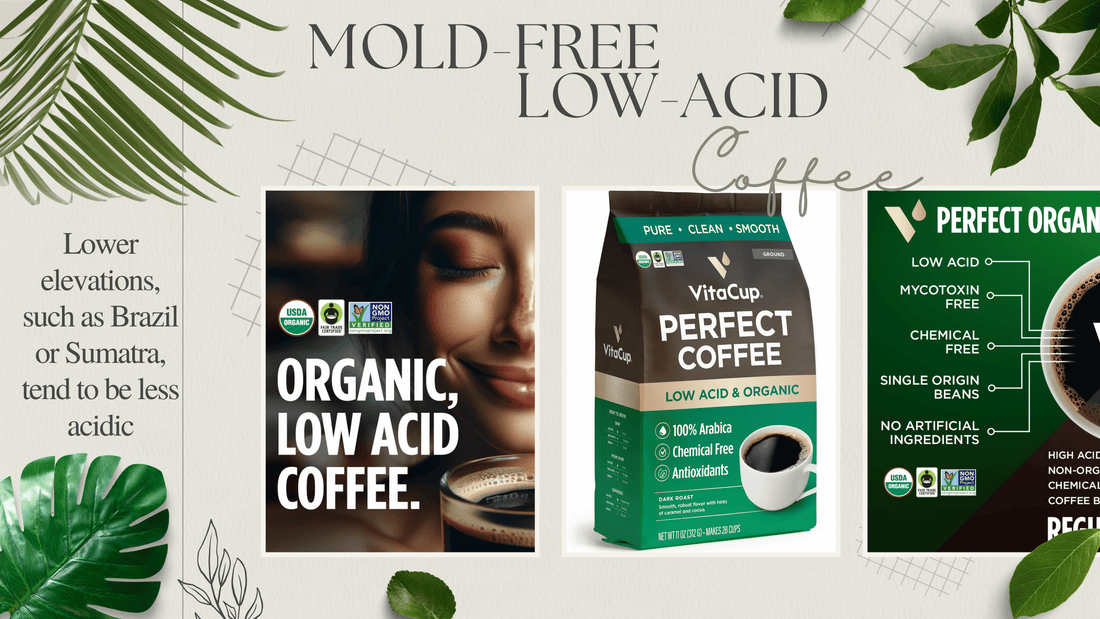
Mold-Free Low-Acid Coffee: A Healthier Choice for Coffee Lovers

I switched to mold-free, low-acid coffee after coffee started giving me acid reflux and jittery crashes that felt disproportionate to how much I was drinking. It turned into a bit of a rabbit hole on coffee quality, so here's the actual breakdown, not just a benefits list.
The mold/mycotoxin issue is real, but often overstated
Coffee beans can pick up mold during growing, harvesting, or storage, and some of those molds produce mycotoxins. This is a legitimate agricultural quality issue that the specialty coffee industry does test for. Where I'd push back on some marketing: the mycotoxin levels in most commercially sold coffee are low enough that mainstream food safety bodies don't consider them a significant health threat for the average person. If you have mold sensitivities, a compromised immune system, or you're just someone who notices you feel worse after regular coffee, seeking out tested, low-mycotoxin beans is a reasonable, low-cost swap — I just don't want to overstate the risk for everyone.
Low-acid is the part that actually changed things for me
This one's simpler and more personally verifiable: darker roasts and beans from lower-elevation regions (Brazil, Sumatra) are measurably less acidic, and that directly reduced my heartburn. If acid reflux, a sensitive stomach, or tooth sensitivity is your actual complaint, this is the lever that matters most — more than the mold-free labeling.
What I actually look for now
- Third-party mycotoxin testing disclosed by the brand, not just a marketing claim
- Medium-to-dark roast, lower-elevation origin
- Cold brew or French press, which naturally extract less acid than drip methods
The one I currently drink is linked here.
Affiliate Disclaimer: This post may contain affiliate links. I only recommend what I personally use.
